Tile itself usually survives water well. What sits underneath and behind it often does not. A few checks can save you from covering a problem.
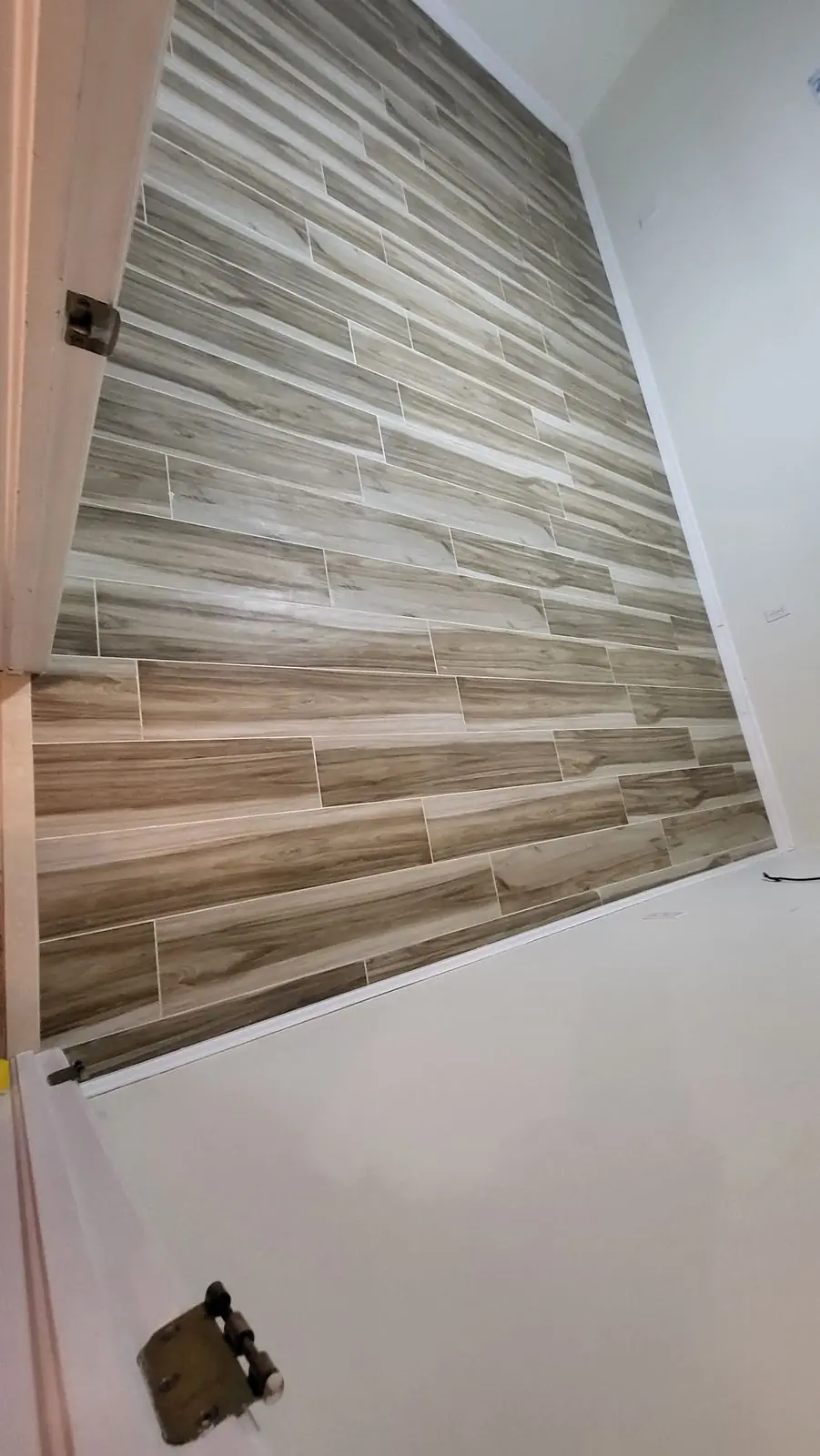
Dry things out first
Moisture trapped under or behind tile can cause mold and loosen the bond. Make sure the area is thoroughly dry before any repair or re-tiling. Your insurer or a remediation professional can tell you what is required.
Check the subfloor and backer board
Plywood subfloors, cement board and drywall behind tile can swell or rot if they stayed wet. Hollow-sounding or loose tile can be a sign of trouble underneath.
Look for cracks and lifted tile
Settling and shifting after a storm can crack tile or pop it loose. A single cracked tile can often be replaced. Widespread cracking may point to a problem with the slab or substrate.
Document everything
Take clear photos before any cleanup or repair, including measurements. This helps with insurance claims and with getting an accurate quote.
Matching existing tile
The hardest part of a repair is often matching tile that may no longer be sold. A good installer can source similar tile or pull spare pieces from an unseen area, like a closet, to blend a repair.
Need a second opinion?
Text Shaun photos of the damage. He can often tell you what is repairable and what needs replacing, and give you a free estimate.
Shaun gives free, written estimates across Lee, Collier and Charlotte counties.
Get my free estimate → Call (862) 354-2391